The Hidden Benefits of Small-Scale Assisted Living for Senior Wellness
Business Name: BeeHive Homes of Portales
Address: 1420 S Main Ave, Portales, NM 88130
Phone: (505) 591-7025
BeeHive Homes of Portales
Beehive Homes of Portales assisted living is ideal for those who value their independence but require help with some of the activities of daily living. Residents enjoy 24-hour support, private bedrooms with baths, medication monitoring, home-cooked meals, housekeeping and laundry services, social activities and outings, and daily physical and mental exercise opportunities. Beehive Homes memory care services accommodates the growing number of seniors affected by memory loss and dementia. Beehive Homes offers respite (short-term) care for your loved one should the need arise. Whether help is needed after a surgery or illness, for vacation coverage, or just a break from the routine, respite care provides you peace of mind for any length of stay.
1420 S Main Ave, Portales, NM 88130
Business Hours
Families often begin their look for assisted living by exploring the large, hotel-like buildings they see from the highway. High ceilings, marble floors, an activity calendar that appears like a cruise ship brochure. It can be remarkable, and for some older grownups, it works extremely well.
Yet a number of the greatest results I have actually seen in senior care took place in much smaller settings: 8 to 20 citizens, a household-style kitchen, staff who understand each resident's walking speed, sleep patterns, favorite breakfast, even the method they like their towels folded.
This quieter side of elderly care does not get as much marketing, but it can exceptionally form lifestyle, specifically for senior citizens who value familiarity, routine, and personal attention.
Small-scale assisted living is not the best answer for everybody, yet its advantages are frequently underestimated. Comprehending those benefits helps households make decisions with more confidence, not just based on look or facilities, however on how a location actually feels and works day after day.
What "Small-Scale" Assisted Living Actually Means
The term "small" explains much more than the variety of certified beds. It usually refers to neighborhoods that look and run more like a home than a facility. That may suggest:
A single-story house transformed into licensed assisted living with 6 to 10 residents.
A small, purpose-built building with 12 to 20 suites, shared living areas, and an open kitchen. A cluster of several small homes on one campus, each with its own care team.The core idea is that homeowners reside in a setting that feels individual and manageable, not like a hotel or a healthcare facility. Hallways are much shorter, staff rotations are smaller, and day-to-day routines are easier to personalize. Member of the family often describe the distinction as "understanding everyone" instead of "determining a system."
From a regulatory perspective, these homes meet the same safety and care standards as larger assisted living facilities. The distinction lies in scale, culture, and the everyday interactions between locals and staff.
Why Size Matters More Than Households Expect
When we talk about elderly care, we usually concentrate on services: medication support, aid with bathing, meals, transportation. All of that is vital. However the size and layout of a community quietly shape practically everything else that matters for wellness.
In smaller assisted living settings, a number of patterns show up once again and again.
Less overstimulation, more calm
Large neighborhoods can feel busy and loud: paging announcements, cleaning machines, crowded dining rooms, several activities running at once. Numerous locals enjoy that level of energy. Others, particularly those dealing with dementia, hearing loss, or anxiety, discover it exhausting.
In a small home, there may be one primary typical location and a table that seats everybody. Conversations blend into a hum rather than a holler. For citizens susceptible to agitation or confusion, this can mean less behavioral signs and a greater determination to leave their room and take part in daily life.
I still remember one female with advancing Alzheimer's disease who had actually been pacing and screaming in a 100-bed community. Personnel did their finest, but the layout and continuous activity appeared to trigger her. Within a month of transferring to a 10-resident home, her daughter informed us, "She still has bad days, however she sits at the table now. She really views what is going on instead of hiding from it." Absolutely nothing about her medical diagnosis altered; the environment did.
Familiar deals with rather of turning strangers
Senior care hinges on trust. A resident who trusts the individual assisting them shower is most likely to accept help, which directly affects health, skin health, and fall danger. Trust develops much faster when the very same couple of caretakers communicate with a resident day after day.
In big centers, staffing is frequently arranged by wing or flooring, with frequent reassignments based on staffing gaps. Night and weekend personnel might be completely different teams. Even well-run communities can struggle to maintain continuity.
In a small-scale setting, there are merely less individuals to keep track of. Homeowners get used to "the morning individual" and "the night person." Families understand who to call about a concern and can recognize when someone new signs up with the team. That continuity typically leads to earlier detection of subtle modifications, like minimized cravings, slower walking, or uncommon sleep patterns.
Over years of observing care groups, I have actually seen small-home caretakers detect problems that may have gone unnoticed elsewhere: a resident who only limps at nights, or a peaceful withdrawal that signifies the start of anxiety instead of "just aging."
Shorter distances, more secure mobility
Distance matters when every step brings a fall threat. In a sprawling structure, a resident might need to walk rather far to reach the dining-room or activity area. Many decide it is much easier to stay in their space, particularly if they feel unstable or embarrassed about utilizing a walker.
In small assisted living homes, all common spaces are generally within a short, direct walk. The kitchen, living space, and dining table are frequently main and visible from the majority of bed rooms. That style naturally encourages motion. Residents are most likely to join meals, stick around in the living-room after eating, and engage with personnel and neighbors.
Indirectly, this reduces social isolation, which is a real driver of cognitive decrease and mood conditions in older grownups. A brief hallway can be the distinction in between "I will go see what smells so excellent in the kitchen area" and "I will simply remain in bed."
How Every day life Feels Different in Small Homes
Families frequently ask, "However will there suffice for Mom to do?" They visualize large-group bingo games and live music events. Those absolutely have value. Small-scale assisted living, nevertheless, generally leans into a various type of engagement: ordinary, significant, repeatable.
Imagine a typical early morning in a small home. A caregiver is cooking eggs in an open cooking area, talking with the two locals who constantly get up early. Another resident wanders in, still in a bathrobe, and sits down with a cup of coffee. Somebody folds laundry at the table, more as a social activity than a chore. The television is off or quietly playing the news for those who care to listen.
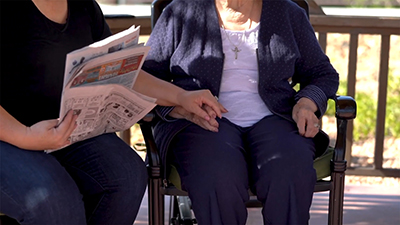
Activities in this type of environment are often woven into the material of the day instead of set up as events. Baking, gardening in a small yard, basic card games, reading the paper together, or arranging buttons for someone with mid-stage dementia who requires a tactile task. Participation tends to be more natural: homeowners sign up with when they feel up to it, in some cases for 10 minutes, in some cases for an hour.
Large neighborhoods can, naturally, develop homelike regimens, and some do it very well. However, small homes are structurally oriented around the kitchen table and living-room. The "activity space" is the same place where individuals eat and talk. That familiarity makes it easier for more reserved or baffled locals to roam in and out without feeling like they are intruding on a huge event.
The Subtle Health Advantages of Being Known
Good elderly care focuses on more than preventing crises. It intends to notice small discrepancies before they become emergencies. Small-scale assisted living often has an edge here, merely due to the fact that staff can observe each person more closely.
When there are 10 to 15 citizens, the caregiving team normally knows:
Who usually consumes everything on their plate and who is a light eater.
Who takes afternoon naps and who rarely lies down throughout the day.Who showers in the early morning versus the evening, and how they generally move while doing it.
When something modifications, it stands out. A caretaker may discover that Mr. Z, who typically jokes with everybody, is unexpectedly peaceful and skipping dessert. Or that Ms. J, who always strolls separately to the dining-room, now grabs hand rails more often. These cues frequently precede urinary tract infections, heart concerns, or medication adverse effects by days.
Is this impossible in a larger community? Not at all. Lots of larger assisted living suppliers train staff to track and report changes carefully. However the ratio of residents to personnel, combined with the sheer volume of people moving through the building, makes that level of intimate familiarity more difficult to sustain consistently.
In a small neighborhood, a caretaker's mental "map" of each resident is easier to keep and share throughout shift modifications. I have endured handoff meetings in small homes where personnel diminish each resident in two or three minutes: consuming patterns, mood, bowel routines, mobility, and household updates. It is detailed, but it does not feel like a checklist, since they are explaining individuals they know.
The Role of Respite Care in Small Settings
Respite care, whether for a couple of days or a couple of weeks, typically acts as a trial run for long-lasting assisted living. Households utilize it when a main caregiver requires surgical treatment, rest, or just a break from extensive care. The quality of that short stay can highly affect future decisions.
Short-term visitors frequently change quicker in small homes. The factors are practical and emotional:
There is less to find out. One front door, one main living room, one dining space.
Faces become familiar within a day or 2. Both personnel and homeowners quickly learn the newbie's name. Daily routines are fluid sufficient to accommodate existing habits, like a later wake-up time or an afternoon television show.From the household's perspective, respite care in a small assisted living home can feel like leaving a loved one with very engaged relatives instead of with an institution. You can often speak directly with the individual who will be handling medications or monitoring showers, rather of routing every concern through a front desk.
Of course, capability is a restriction. Smaller suppliers might have fewer respite beds offered, particularly throughout peak times such as vacations. They likewise might need a minimum stay or have particular admission criteria, considering that including even a single person alters the characteristics of an extremely small home. Planning ahead is important.
Still, when respite care works out in a small setting, it can alleviate huge tension. I have actually seen partners who had withstood outside help for many years finally agree to regular respite remains after experiencing how their partner prospered in a small, foreseeable environment.
Family Participation and Communication
Families hardly ever choose an assisted living neighborhood based upon interaction practices, however they quickly learn how important those practices are. When you are not in the building every day, you depend entirely on staff to keep you informed.
Small-scale homes tend to offer more direct, casual interaction. You call, and the individual who addresses the phone frequently understands your mother personally and can step away from the kitchen or living space to respond to particular questions. Families might receive texts or images from familiar caretakers. If you visit at random times, you generally see the same core staff, not a continuous rotation.
This is not ensured, naturally. Some small operators are disordered or understaffed, just as some large facilities stand out at structured, proactive interaction. But when small communities are run well, their size makes it simpler to maintain personal contact. Concerns assisted living near me hardly ever get lost in an intricate chain of command.
Families likewise tend to feel more comfortable raising issues in small settings. When you know the administrator, nurse, and caretakers by name, it feels much easier to state, "Mom looked a bit off on Tuesday, did you discover anything?" or "Dad appears more confused after dinner, can we evaluate his medications?" Excellent operators invite this input. It frequently leads to earlier interventions and more fine-tuned care plans.
Trade-offs: Where Larger Communities May Have the Advantage
It is very important to be honest about the restrictions of small assisted living. Larger is not immediately much better, however it frequently comes with resources that small homes can not match.
Larger assisted living communities might use:
- More on-site features, such as fitness centers, chapels, beauty parlor, and multiple dining venues.
- A wider variety of official activities, including outings, live home entertainment, and specialized programs.
- Greater capacity to serve homeowners who require greater levels of care, by using more customized staff or on-site health providers.
- Transportation fleets for regular medical consultations, going shopping trips, and group outings.
- More versatile space options, from studios to two-bedroom apartment or condos with kitchenettes.
Families ought to not assume, nevertheless, that their loved one requires every possible facility. The crucial concern is whether those resources will in fact be utilized. A resident with sophisticated Parkinson's illness, who leaves their space mostly for meals and short walks, might benefit much more from a small, quickly navigable environment and responsive caretakers than from a theater, a bistro, and an everyday expeditions calendar.
For highly social, independent older adults, especially those who drive or enjoy a jam-packed schedule, a bigger setting may certainly be a better fit. The best match depends upon personality, health status, and what "a good day" reasonably appears like now, not what it appeared like 10 years ago.
When Small-Scale Assisted Living Might Not Be Ideal
Some scenarios genuinely require a bigger or more medically intensive environment.
If a senior has complicated medical needs that edge on experienced nursing, such as ventilator support, complex injury care, or frequent IV therapies, a small assisted living setting might not be accredited or equipped to manage them.
If an individual prospers on large-group activities, range, and consistent novelty, the quieter rhythm of a small home may feel confining. I remember a retired teacher who enjoyed lecturing, arranging groups, and carrying out. She attempted a small setting for a few months and felt restless. Transferring to a bigger community with a resident council, choir, and active volunteer group fit her much better.
Cost can also be an aspect. Small homes often charge greater rates per resident, since their staffing design is more intimate. On the other hand, some family-run homes are surprisingly cost effective, especially in rural or suburban areas. Costs vary significantly by area, ownership, and level of care.
Finally, small settings can be vulnerable to turnover. If 2 crucial employee leave at the exact same time, the character of the location may move more significantly than in a large center with layers of management. Families must focus not just to the existing group but to the stability of management and ownership.
How to Evaluate Small-Scale Options: A Practical Checklist
When you tour a smaller assisted living or respite care setting, you will likely see immediately whether it feels cozy or cramped, warm or chaotic. Beyond gut instinct, a few particular questions can help clarify whether the home can providing strong, sustainable senior care.
Here is a concise list to bring with you:
- How numerous homeowners live here, and what is the common staff-to-resident ratio on days, nights, and nights?
- Who supervises medical concerns, and how do they communicate with families about changes or emergencies?
- What kind of training do caregivers receive, particularly around dementia, fall avoidance, and medication assistance?
- How are meals planned and prepared, and can they accommodate particular dietary needs or preferences?
- What occurs if my loved one's care requires increase? Can they stay here, or would we require to move again?
Listen not only to the material of the responses, however likewise to the tone. Do staff discuss homeowners as people or as categories? Are they particular when they describe everyday regimens and care plans, or do they count on vague reassurances?
Pay special attention to how locals communicate with each other and with personnel throughout your visit. A quick shared joke in the corridor, a caregiver observing that somebody's sweatshirt has slipped off their shoulder, a resident requesting help and getting it calmly within a minute or two: these micro-moments say more about the quality of elderly care than any brochure.
Balancing Head and Heart in the Final Decision
Choosing assisted living, particularly for somebody you love deeply, is never ever just a monetary or logistical decision. It is a psychological negotiation between safety and autonomy, between familiarity and required support.
Small-scale assisted living welcomes a particular type of compromise. Your loved one may give up a personal cooking area and the privacy of a large building, however get an environment where their tiniest habits matter and their absence from the table is noticed within minutes. Relative may travel a little farther or accept fewer amenities, in exchange for daily intimacy and responsiveness.
The hidden advantage of these small homes is not just their size. It is the way scale shapes relationships: fewer people in the room, more possibilities to be seen and kept in mind, less distance in between the person who notifications an issue and the individual who can fix it.
For families weighing options, the most beneficial question is often this: "If my loved one had a bad day here - baffled, unstable, refusing care - how would this particular team and design affect what happens next?" In a small, well-run assisted living home, the answer typically involves familiar faces, fast acknowledgment of modification, and reactions customized to the person, not the policy.
When that is the reality, many older grownups do not just live longer. They live better, in ways that are quiet, quantifiable in small details, and deeply meaningful to those who understand them best.
BeeHive Homes of Portales provides assisted living care
BeeHive Homes of Portales provides memory care services
BeeHive Homes of Portales provides respite care services
BeeHive Homes of Portales supports assistance with bathing and grooming
BeeHive Homes of Portales offers private bedrooms with private bathrooms
BeeHive Homes of Portales provides medication monitoring and documentation
BeeHive Homes of Portales serves dietitian-approved meals
BeeHive Homes of Portales provides housekeeping services
BeeHive Homes of Portales provides laundry services
BeeHive Homes of Portales offers community dining and social engagement activities
BeeHive Homes of Portales features life enrichment activities
BeeHive Homes of Portales supports personal care assistance during meals and daily routines
BeeHive Homes of Portales promotes frequent physical and mental exercise opportunities
BeeHive Homes of Portales provides a home-like residential environment
BeeHive Homes of Portales creates customized care plans as residents’ needs change
BeeHive Homes of Portales assesses individual resident care needs
BeeHive Homes of Portales accepts private pay and long-term care insurance
BeeHive Homes of Portales assists qualified veterans with Aid and Attendance benefits
BeeHive Homes of Portales encourages meaningful resident-to-staff relationships
BeeHive Homes of Portales delivers compassionate, attentive senior care focused on dignity and comfort
BeeHive Homes of Portales has a phone number of (505) 591-7025
BeeHive Homes of Portales has an address of 1420 S Main Ave, Portales, NM 88130
BeeHive Homes of Portales has a website https://beehivehomes.com/locations/portales/
BeeHive Homes of Portales has Google Maps listing https://maps.app.goo.gl/1xZDfURp3wt4uv3T6
BeeHive Homes of Portales has TikTok page https://tiktok.com/@beehive.home.of.portales
BeeHive Homes of Portales has an YouTube page https://www.youtube.com/@WelcomeHomeBeeHiveHomes
BeeHive Homes of Portales has Facebook page https://www.facebook.com/BeeHiveHomesOfPortales
BeeHive Homes of Portales has Instagram page https://www.instagram.com/beehivehomesofportales/
BeeHive Homes of Portales won Top Assisted Living Homes 2025
BeeHive Homes of Portales earned Best Customer Service Award 2024
BeeHive Homes of Portales placed 1st for New Mexico Senior Living Communities 2025
People Also Ask about BeeHive Homes of Portales
What is BeeHive Homes of Portales Living monthly room rate?
The rate depends on the level of care that is needed. We do a pre-admission evaluation for each resident to determine the level of care needed. The monthly rate is based on this evaluation. There are no hidden costs or fees
Can residents stay in BeeHive Homes of Portales until the end of their life?
Usually yes. There are exceptions, such as when there are safety issues with the resident, or they need 24 hour skilled nursing services
Do we have a nurse on staff?
No, but each BeeHive Home has a consulting Nurse available 24 – 7. if nursing services are needed, a doctor can order home health to come into the home
What are BeeHive Homes of Portales's visiting hours?
Visiting hours are adjusted to accommodate the families and the resident’s needs… just not too early or too late
Do we have couple’s rooms available?
Yes, each home has rooms designed to accommodate couples. Please ask about the availability of these rooms
Where is BeeHive Homes of Portales located?
BeeHive Homes of Portales is conveniently located at 1420 S Main Ave, Portales, NM 88130. You can easily find directions on Google Maps or call at (505) 591-7025 Monday through Sunday 9:00am to 5:00pm
How can I contact BeeHive Homes of Portales?
You can contact BeeHive Homes of Portales by phone at: (505) 591-7025, visit their website at https://beehivehomes.com/locations/portales/ or connect on social media via TikTok Facebook or YouTube
You might take a short drive to the Blackwater Draw Museum. The Blackwater Draw Museum offers fascinating archaeological exhibits that create enriching outings for assisted living, memory care, senior care, elderly care, and respite care residents.
Ends · MARIOSLZV229